NATO Jet Intercepts Russian Missile Over Poland: Why the Pilot Didn't Fire
During a massive attack on Western Ukraine, three Russian aerial targets violated Polish airspace, but a Swedish Gripen pilot refrained from shooting due to poor visibility.
 🧠AI Analysis
Photo: TSN
Key points
- Three Russian objects violated Polish airspace during an attack on Ukraine.
- A Swedish Gripen pilot had permission to engage but could not visually confirm the target.
- The speed of X-101 missiles and Geran-5 drones exceeded 800 km/h.
A massive bombardment of Ukraine's western regions on November 20 led to another violation of Polish airspace. According to the Polish military command, 11 suspicious objects were detected during the attack, three of which crossed the state border. Air raid sirens were activated in the Lublin and Podkarpackie voivodeships, which directly border Ukraine's Volyn region.
Technical Challenges of Interception
To defend the skies, Poland scrambled a pair of F-16 fighters and two Swedish Gripen aircraft. One of the Swedish pilots managed to intercept a Russian X-101 cruise missile. Although the NATO Combined Air Operations Centre in Germany granted the pilot permission to destroy the target, no weapons were deployed. Lieutenant General Ireneusz Nowak, Operational Commander of the Polish Armed Forces, explained that "extremely difficult weather conditions" prevented the visual identification of the object.
Military officials noted that the target could not be identified even with modern optoelectronic systems. Since not all protocol conditions for weapon engagement were met, the pilot decided not to open fire. The objects were traveling at speeds exceeding 800 km/h, classifying them as either X-101 missiles or jet-powered "Geran-5" drones.
Coordination and Aftermath
The operation was conducted in close cooperation with Ukraine, which provided tracking data via the "Virage" system. In addition to the fighters, a Saab 340 AEW&C aircraft and a Dutch MRTT tanker were active in the area. Although the missiles fell on Polish territory, causing powerful explosions in several settlements, no casualties were reported. Defense Minister Władysław Kosiniak-Kamysz confirmed the discovery of debris from three attack assets.
Prime Minister Donald Tusk described the incident as a deliberate Russian provocation, while NATO Secretary General Mark Rutte emphasized the gravity of the breach of Alliance security. The military continues to analyze the data to improve response protocols under limited visibility conditions.
Source TSN — tsn.ua/politika/rosiyski-rakety-nad-polshcheiu-pilot-vynyshchuvacha-mav… ↗
Read next
 💡Tech
Kitchen Ergonomics: Why Massive Dining Tables Are Going Out of Style
Interior designers suggest moving away from bulky dining sets in favor of compact, café-style arrangements.
 🛡️Security
Explosions reported in Russia's Krasnodar following drone attack on Rosgvardia facility
A drone attack on Krasnodar overnight on November 22 caused smoke near a military base and forced the local airport to restrict operations.
 🏛️Politics
Donald Trump comments on the departure of press secretary Karoline Leavitt
President Donald Trump expressed his regret over the resignation of White House press secretary Karoline Leavitt, who left to focus on her family.
 🎭Culture & Sport
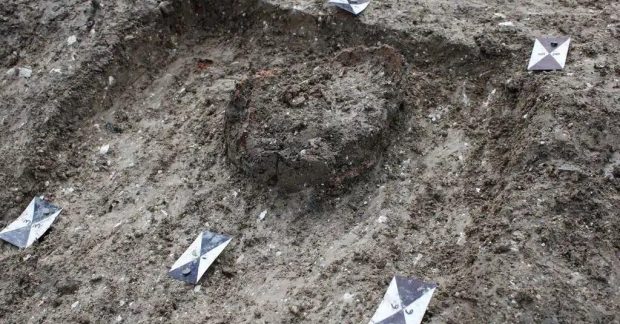
Archaeologists discover unique Roman infant burial in Great Britain
During excavations in Buckinghamshire, researchers found an infant burial in a ceramic vessel, a practice rare for the region, accompanied by ritual offerings.
 🚌Transport
Donald Trump publicly reaffirms friendly relations with Vladimir Putin
US President Donald Trump posted a photo with the Russian leader on social media, captioning it 'My Friend'.
 🚌Transport
SSU Alpha special forces neutralize over 4,300 invaders in one week
The SSU's Alpha Special Operations Center has set a new effectiveness record, eliminating over 4,300 Russian troops in seven days.